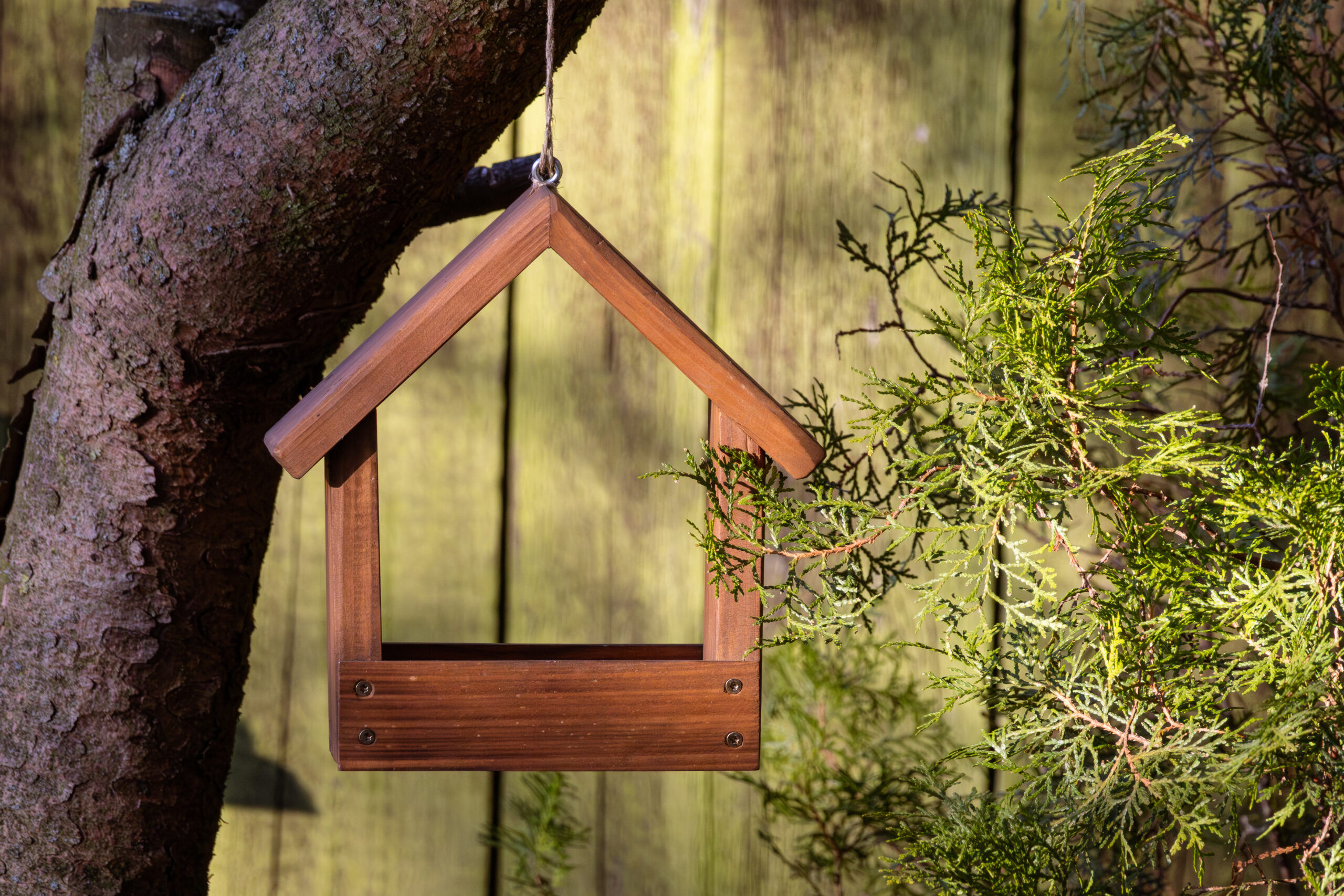
Review: Wooden Bird Feeder with Roof (At the Bird Table #1)
The landscape, in the sacred hush of November days, wraps itself in the cold shades of misty mornings. The sun of late autumn gently brushes the bare hillsides, nods a greeting to a rising flock of ravens, and disappears into the shadows of a mysterious forest. The afternoon light gives one last golden gleam to the muddy paths strewn with fallen leaves before fading into the mist and yielding to the early darkness of autumn evenings. As the light dwindles, birds have less time to find food, and every moment they can gather energy becomes precious.
Time to Open the Bird Buffet
As natural food sources grow scarce, early November is the perfect time to start winter feeding. It’s best to begin with small amounts of seed so the birds can gradually get used to the new source of food. But birdseed alone isn’t enough – you also need a good feeder. When I went looking for my very first “bird buffet,” I fell in love with a wooden house-shaped feeder. How did it turn out? Which birds came to visit? And would it suit your garden, too? Let’s take a look – the winter feeding season has begun! :o)
A Classic Feeder with a Touch of the Forest
For my first feeder – a small wooden house – I chose purely by looks. In my mind’s eye, I saw a magical little cottage with tiny birds fluttering to it, pecking happily, and chirping a farewell as they flew away. What can I say? In my dream of the perfect (or rather, prettiest) bird feeder, things like cleaning and durability didn’t really have a place.
“I test bird feeders that bring joy not only to birds but to people, too.
Amarylka, from the series “At the Bird Table”
This time, we’re landing at the table with a little spruce-wood bird cottage.”
A skilled carpenter made my feeder from sanded spruce boards. He brought out the natural wood grain by lightly charring it with a flame and staining it a warm oak tone. Finally, he coated the surface with a clear oil-based finish to protect it from the weather. The small roof shelters the food and gives the feeder its fairy-tale charm.
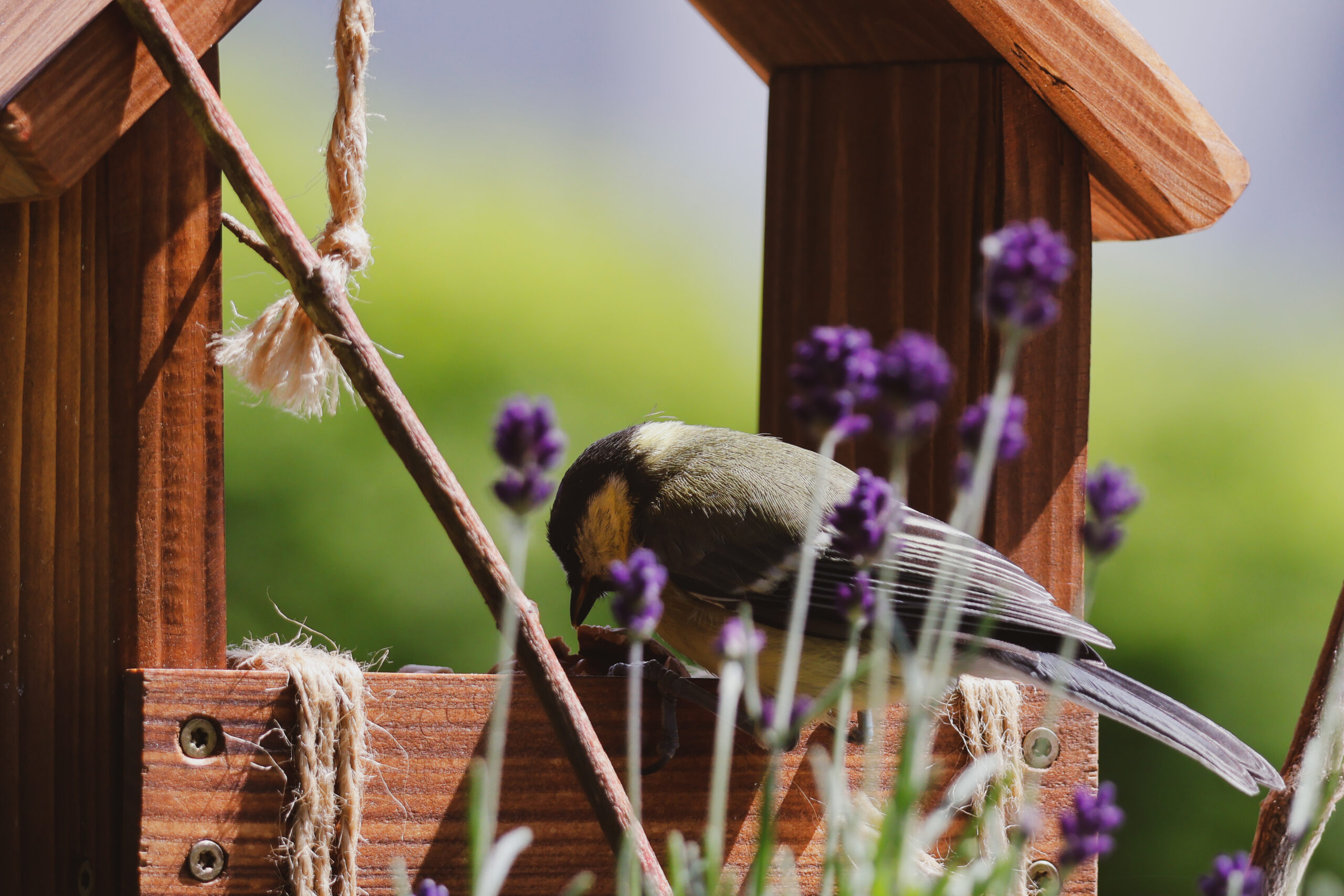
Good Work from a Talented Craftsman
The feeder measures about 20 × 18 × 9 cm (8 × 7 × 3.5 inches) and feels surprisingly sturdy for its size. The wood has a lovely grain and is smoothly finished. The boards are neatly joined, and no screw heads stick out. Birds can perch comfortably on the edge without slipping – wood is simply kinder than plastic.
A metal hook with a cord on the roof makes it easy to hang the feeder on a balcony or in a garden – ideally somewhere out of reach of cats and other animals. The 10 × 8 cm base holds only a small amount of seed or nuts, but that’s actually a plus: the food is eaten quickly and doesn’t spoil.
Spruce Wood in the Spotlight
The little house is made of spruce – an affordable, lightweight, and easy-to-work wood. Spruce is a softwood, which means it can absorb moisture quickly if untreated. On the other hand, it’s pleasant to work with and, when sealed properly, can last surprisingly long.
I don’t expect the feeder to survive decades of winters, but thanks to the careful craftsmanship, charring, and protective finish, everything possible has been done to make it durable. With proper care and if kept in a sheltered place, it should last several seasons.
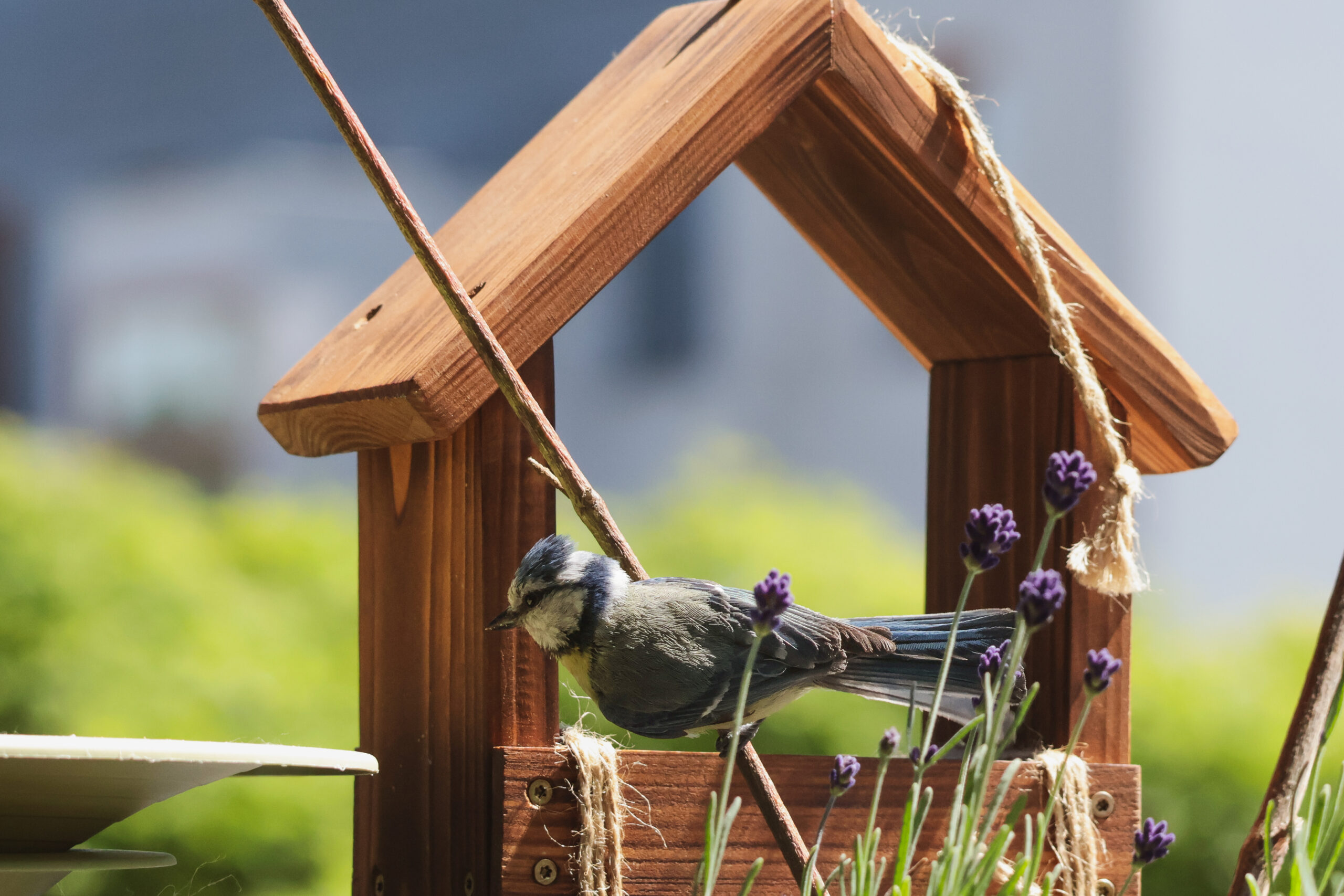
Notes from the Bird Table (How the Blue Tit Approved) 🐦
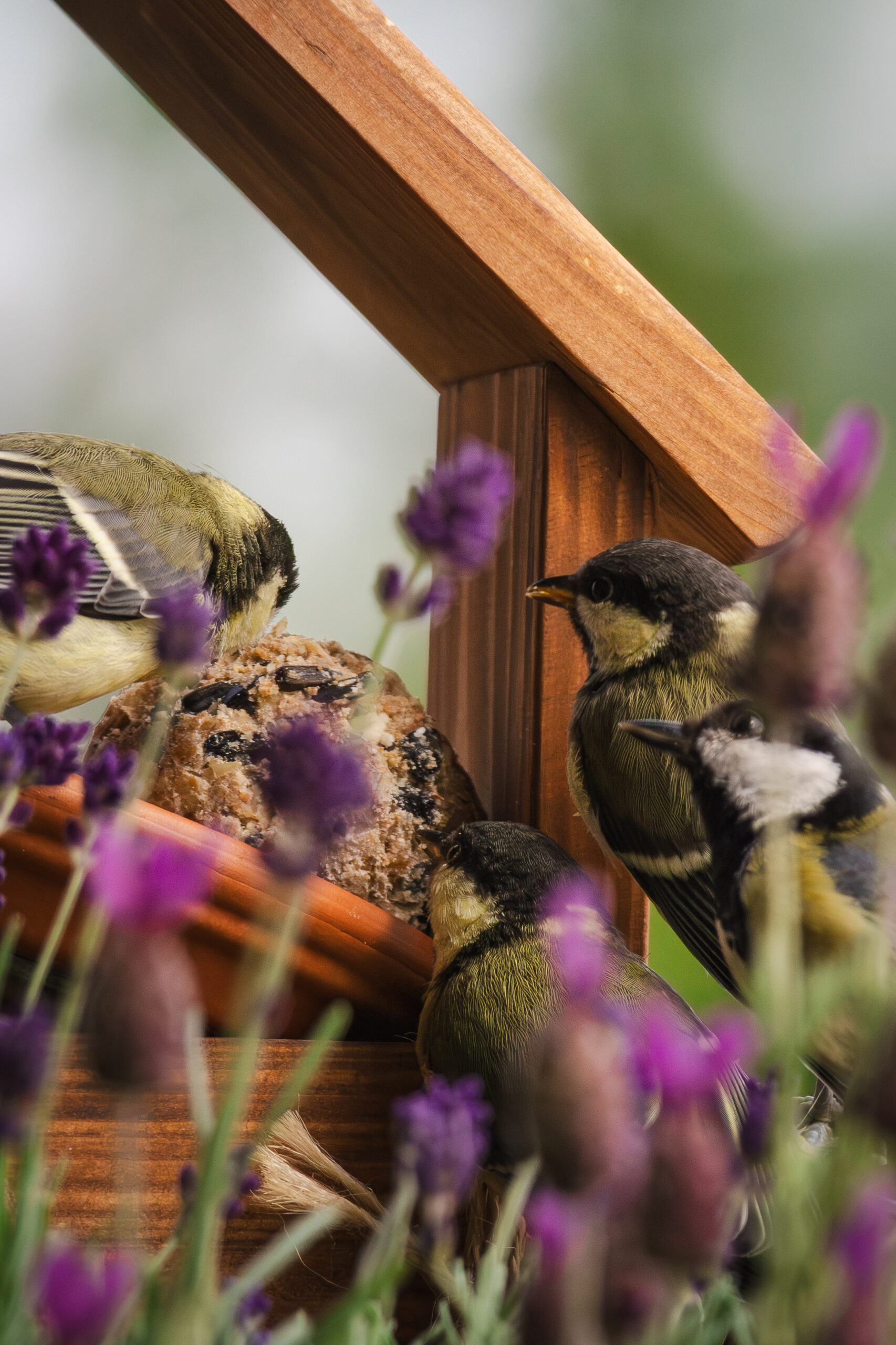
I started feeding birds last spring, and the local songbirds quickly took a liking to the little house. Soon blue tits and great tits were regular visitors – and before long, they brought their fledglings along. I couldn’t help feeling like a storybook Snow White. :o)
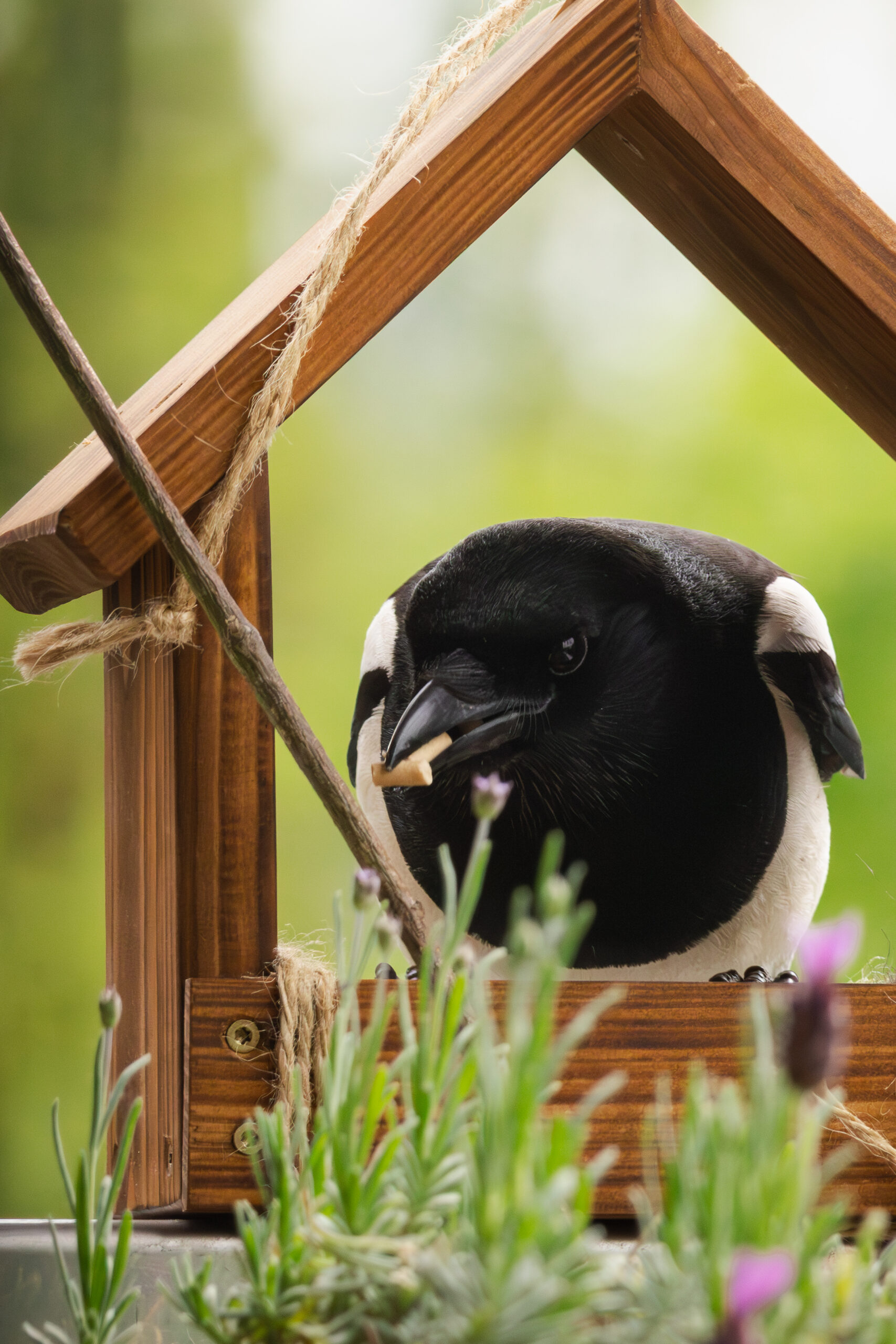
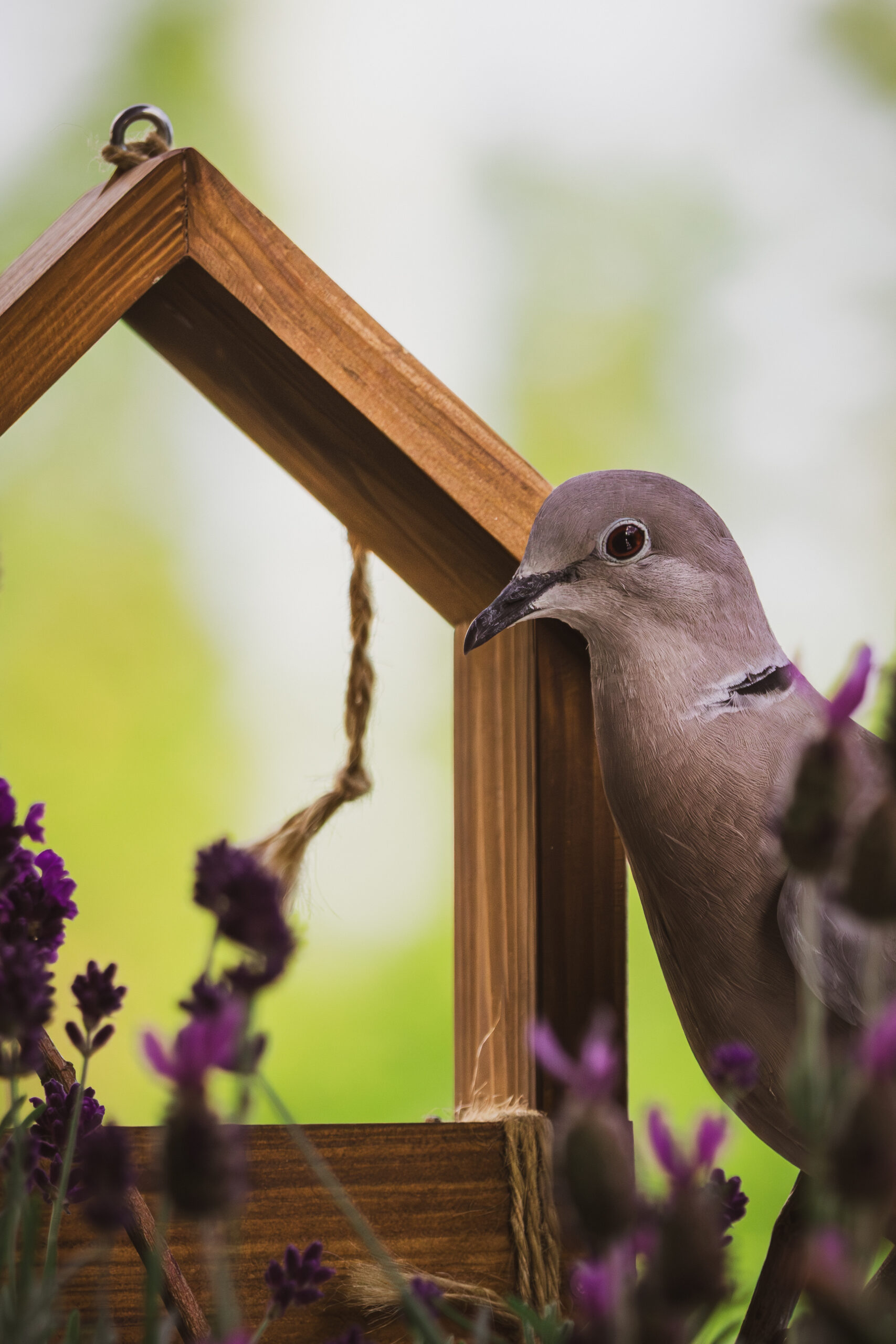
My feeder bliss didn’t last forever, though. A cheeky magpie croaked loudly, squeezed itself into the feeder, and triumphantly flew off with the suet ball I had bought for the tits. Then the pigeons joined in – so I moved the feeder to another spot. Now it hangs from a tree in the garden, serving and shining there like a tiny wooden jewel.
How to Clean a Wooden Bird Feeder
Keeping a bird feeder clean is important – not only for looks, but for the birds’ health. Dirty feeders can quickly spread disease.
Basic rules:
- Hang the feeder in a sheltered, quiet place where it’s easy to refill and clean.
- Use only loose seed made for wild birds – never kitchen scraps.
- Every one to two weeks, remove leftover food and droppings. Wash with warm water or a mild vinegar solution and let it dry completely.
- After a few years, refresh the surface with a coat of natural oil or wood stain to extend its life.
Wooden Bird Feeder with Roof
A hanging wooden bird feeder in the shape of a small house looks charming on any balcony or in any garden. The seeds inside are sure to please your feathered visitors, and with a little care, the feeder will last more than one season.
Pros 💚
- Natural look and classic “little house” design
- Handmade from nicely finished spruce wood
- Roof protects food; open sides allow a quick escape from predators
- Ideal for balconies and small gardens
- Reasonable price (around 300 CZK / $13)
Cons 💔
- Accessible to larger birds (magpies, pigeons)
- Shallow base holds less food
- Harder to clean than plastic feeders
- Wood requires maintenance over time
Do you feed birds, too? Which feeder works best for you – and who visits your feeding station? Share your stories in the comments! 🐦✨